If your SEO strategy in 2025 is based on “Keyword Density,” you might as well be sending a telegram in the age of WhatsApp.
It’s harsh, but it’s true.
Most business owners (and sadly, most agencies) still view Google as a library card catalog. They think if they type the word “Best Pizza” onto a page 50 times, Google will rank them.
Ten years ago? Sure, that worked.
Today? That is a fast track to page 10.
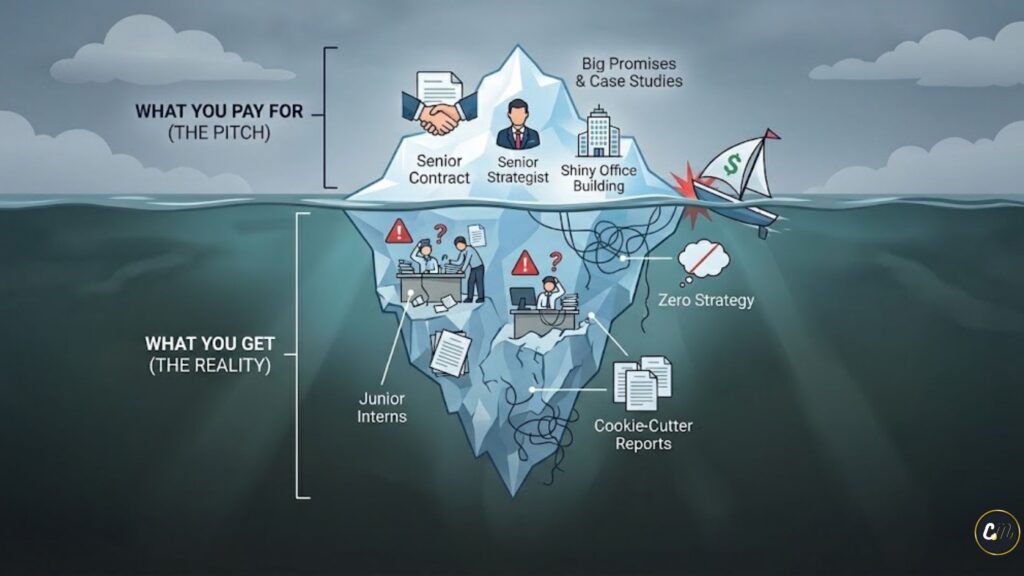
I’m Rakesh Mondal, and I’ve spent the last 5+ years dissecting Google’s patents and algorithms. What I found changed my entire career—and it’s the reason I left the traditional agency world (which I talk about in The Big Agency Scam) to build strategies that actually work.
Here is the secret: Google doesn’t read words anymore. It understands “Concepts.”
Welcome to the era of Semantic SEO.
Strings vs. Things: The “Wow” Science
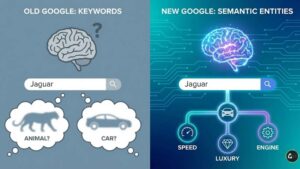
In 2012, Google quietly launched the Knowledge Graph. Their motto was: “Things, not strings.”
Here is what that means for your business:
- A String is a sequence of characters (e.g., “r-e-d s-h-o-e-s”).
- A Thing (Entity) is a concept understood by the machine (e.g., Red Shoes = Footwear, Fashion, Nike, Dorothy, Wizard of Oz).
When you write content, Google’s AI (RankBrain and BERT) is analyzing the Vector Relationship between words.
The Math of Semantic Proximity:
If you write an article about “Coffee,” Google expects to see related entities like “Bean,” “Roast,” “Caffeine,” and “Barista.”
If you just stuff the keyword “Buy Coffee” 100 times but miss the semantic context, Google classifies your content as Low Quality and buries it.
This is why “Keyword Stuffing” is dead. And this is why my approach works when others fail.
How I Dominate Markets Using “Entity Stacking”
When I take on a project—whether it was scaling traffic for enewsz.in to 20k viewers or handling global SEO for a Pet Company—I don’t start with a keyword list.
I start with an Entity Map.
I look at your brand and ask: “How do we force Google to associate your Brand Name with your Niche?”
If I can get Google’s Knowledge Graph to trust that [Your Brand] is an expert on [Your Topic], you win. You don’t just rank for one keyword; you rank for thousands of related terms automatically.
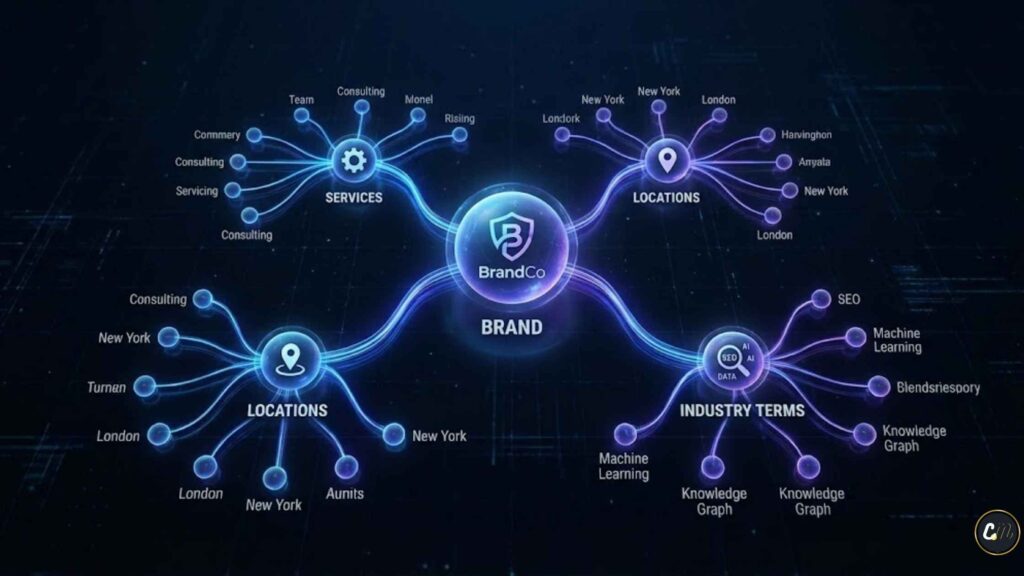
This is the “Topical Authority” holy grail.
The Result?
- Higher Rankings (because Google trusts you).
- Sustainability (algorithms change, but facts don’t).
Future Proofing against AI which I explain in Will AI Kill SEO?.
Why Most Agencies Can’t Do This
Semantic SEO is hard.
It requires understanding Schema Markup (JSON-LD), Natural Language Processing (NLP), and Structured Data.
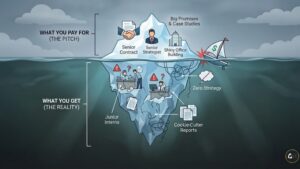
Most agencies assign your account to an intern who barely knows how to use WordPress. They can’t do this. So they sell you what they can do: Basic keyword blogs.
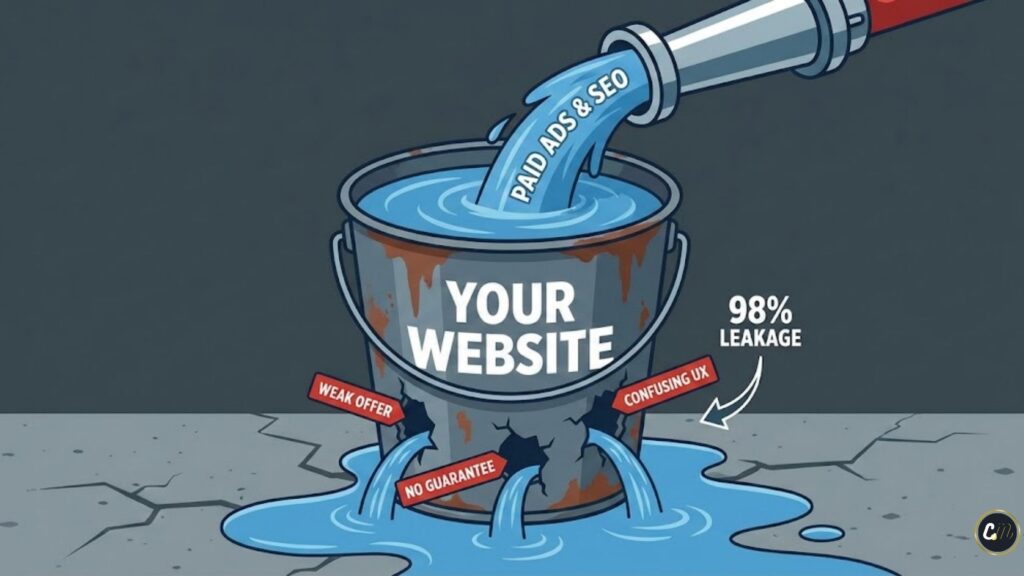
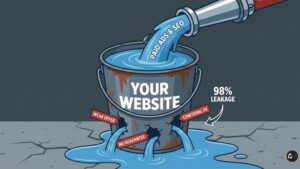
This creates a “Leaky Bucket” where you get traffic that doesn’t stick. Read more on why this kills your sales in Traffic is Useless if Your Bucket Leaks.
I am a Technical SEO at heart.
My background isn’t just writing pretty words; it’s understanding the code that carries those words to the search engine.
- I manually code Schema Markup.
- I optimize for “Phrase-Based Indexing.”
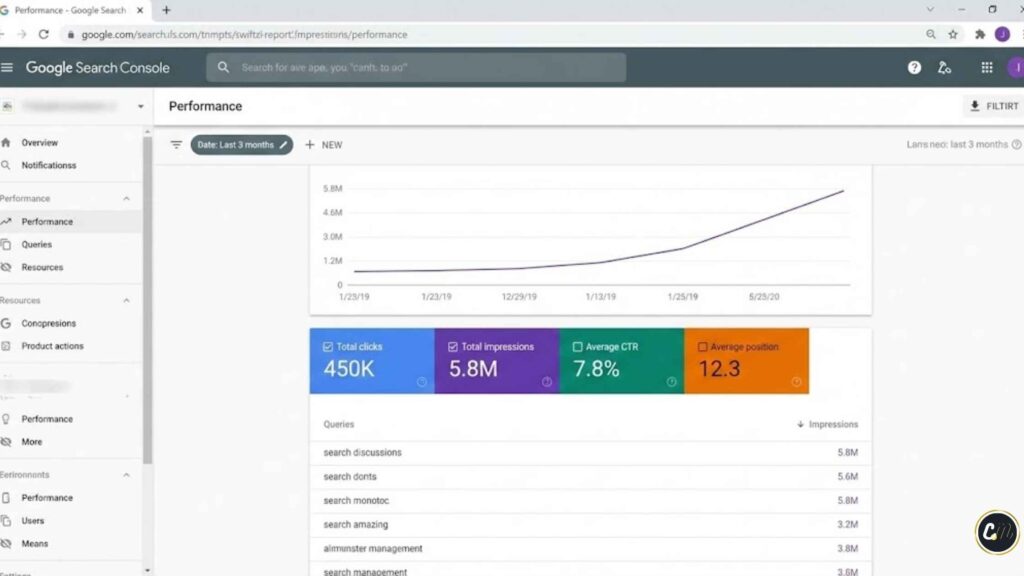
- I use Advanced Tracking to measure how these entities drive actual revenue.
The “Google Trust” Factor
Think of Google like a high-end dinner party.
- Keywords are you shouting your name at the door. “I am Rakesh! I am Rakesh!”
- Entities are the host introducing you. “This is Rakesh, the Semantic SEO expert from India.”
Who gets a better seat at the table?
My job is to make Google introduce you.
I learned the importance of reputation and trust early in my career—read my full story in My Journey: From Startup Founder to SEO Strategist.
Stop Chasing Algorithms. Start Building Authority
If you are tired of your rankings dancing every time Google releases a “Core Update,” it’s time to switch strategies.
Semantic SEO is Algorithm-Proof. Why? Because it’s based on Truth and Data, not tricks.
Do you want to see your brand’s “Entity Score”?
I can run a Semantic Audit on your website and tell you exactly how Google understands (or misunderstands) your business.
Let’s stop playing word games and start dominating the topic.
- Why I Left the ‘Big Agency’ World to Build the Only Team with Real Skin in the Game

- The “Big Agency” Scam: Why Your High Retainer is Funding Their Office Parties, Not Your Growth
- Traffic is Useless if Your Bucket is Leaking: How to Engineer an Irresistible Offer
- Why “Keywords” Are Dead in 2025: The Rise of Semantic SEO & Entities
- You Can’t Scale What You Can’t See: Why 90% of Business Owners Are Marketing Blind